GlucoBliss vs Walking After Meals: Which Did More For My Numbers?
Everyone knows walking wins. The useful question is by how much, and whether anything is left for a supplement to do.
Louise T.
Is walking better than supplements for blood sugar?
Post-meal walking has substantially stronger evidence than any blood sugar supplement. Muscle contraction increases glucose uptake through a pathway that works partly independently of insulin, and even ten to fifteen minutes of light walking after a meal measurably reduces the post-meal glucose rise. Supplements address different and generally smaller-effect mechanisms and are best considered alongside movement rather than instead of it.
How I ran it
Twelve weeks of a ten-minute walk after my main meal, no supplement. Then twelve weeks of the supplement while continuing the walking.
Not a controlled comparison — sequential, unblinded, with an obvious order effect since the second phase built on whatever the first achieved. But it is closer to an honest comparison than most people bother with.
I measured two-hour post-dinner readings, four times weekly throughout.
Phase one: walking only
Baseline: two-hour post-dinner averaged 9.6 mmol/L.
Week 12: averaged 8.1 mmol/L.
A 1.5 point improvement from ten minutes of walking. I found that genuinely startling, and I had been sceptical that something so small could matter.
The mechanism is not subtle once you know it. Contracting muscle takes up glucose through GLUT4 translocation that occurs partly independently of insulin. You are essentially opening a second door for glucose to leave the bloodstream, and it does not require the insulin signal to be working well.
Timing matters more than duration. Walking within thirty minutes of eating, while glucose is still rising, does considerably more than the same walk two hours later.
Phase two: walking plus supplement
Week 12 of phase two: averaged 7.4 mmol/L, from 8.1.
A further 0.7 point improvement on top of the walking. Real, and roughly half the size of what the walking alone had produced.
Cravings also dropped substantially in this phase, which walking had not touched at all.
So the ratio is about 2:1 in favour of the walking, which is roughly what I would have guessed from the evidence bases involved.
Alongside the walking, not instead of it
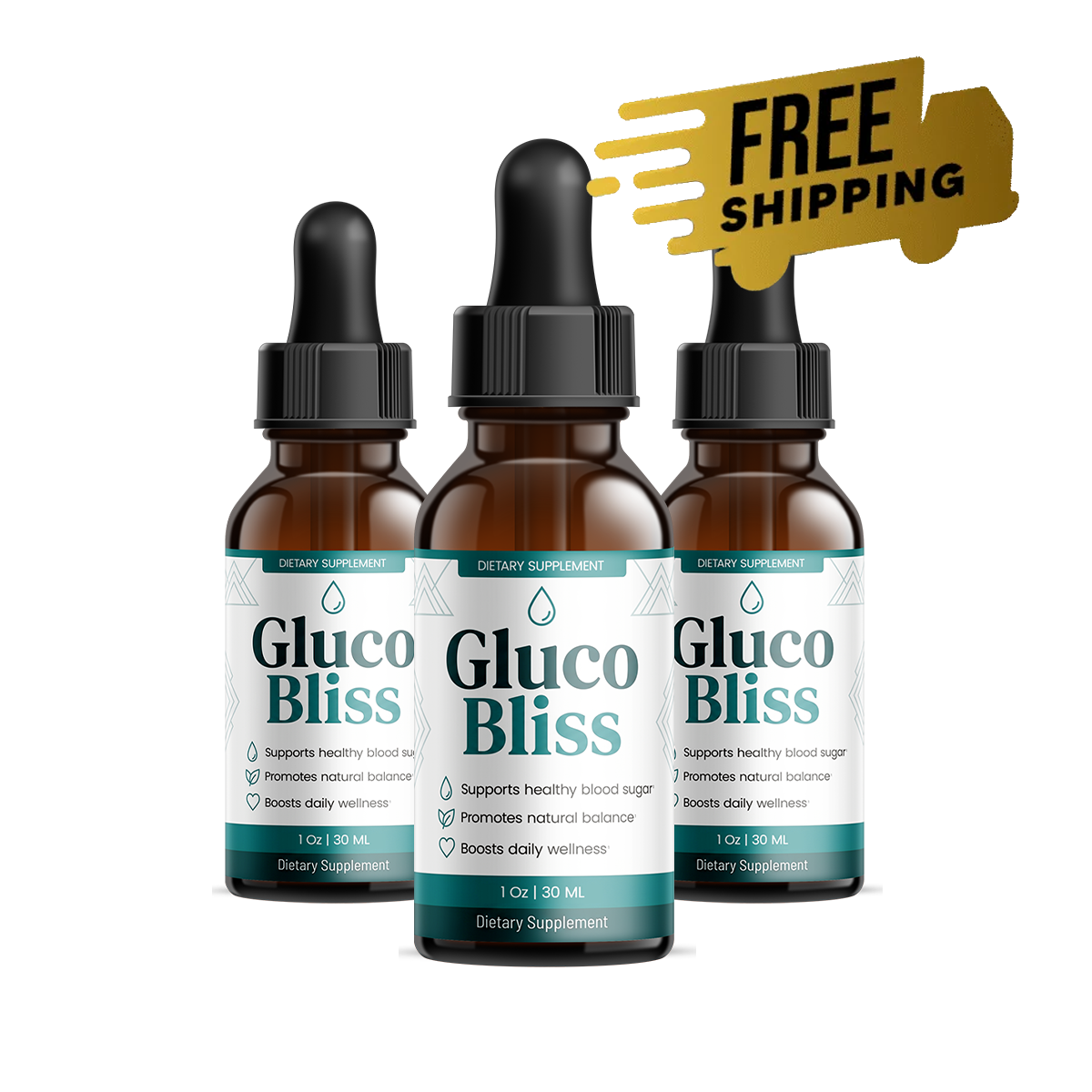
GlucoBliss targets absorption and insulin signalling — different mechanisms from exercise.
Why they are not really competing
They act on different parts of the same system.
Walking increases glucose disposal — more glucose leaving the bloodstream into muscle, through a partly insulin-independent route.
The supplement acts more on arrival — gymnema and green tea slowing absorption — and on insulin signalling through chromium.
Slower in and faster out are complementary rather than redundant, which is consistent with the fact that they stacked rather than one making the other redundant.
But if you have to choose
Walk. It is free, the evidence is enormously stronger, and the benefits extend far beyond glucose — cardiovascular risk, mood, sleep, joint health, mortality.
It also does not interact with your medication, does not require a conversation with your pharmacist, and cannot be adulterated with undeclared glyburide.
If someone told me they had $294 and could either buy six bottles or buy a decent pair of shoes and walk after dinner every day for a year, I would tell them to buy the shoes. That is an odd thing to write in a review on a seller's own website, and it is what I actually think.
Where the supplement earned its place for me
The cravings. Twelve weeks of daily walking did nothing for the four o'clock biscuit pull. Five weeks of the drops halved it.
That is a specific problem walking does not address, and it is why I have kept taking it rather than concluding the walking was sufficient.
Pros and cons
What worked
- Supplement added 0.7 mmol/L on top of walking's 1.5
- Halved a craving pattern walking did nothing for
- The two mechanisms are complementary rather than redundant
- Combined result exceeded either alone
What did not
- Walking produced roughly twice the effect and costs nothing
- Walking has vastly stronger evidence behind it
- Walking carries no interaction risk with medication
- Without the craving issue I would question whether it justified itself
The verdict
Walking after meals produced roughly twice the improvement in my post-meal readings that the supplement did, for free, with far better evidence. The supplement added a further 0.7 mmol/L on top and halved a craving pattern that walking had not touched at all. They target different mechanisms and stacked additively. The honest conclusion is that movement is the priority and the supplement is a reasonable addition for someone who has already done that.
Sources & further reading
- NIDDK — Physical activity and blood glucose.
- American Diabetes Association — Physical activity recommendations and post-meal movement.
- Harvard T.H. Chan School of Public Health — Carbohydrates and blood sugar.