How Does GlucoBliss Work?
Three points of leverage on one system: what gets absorbed, how well the insulin signal lands, and how much the liver adds back.
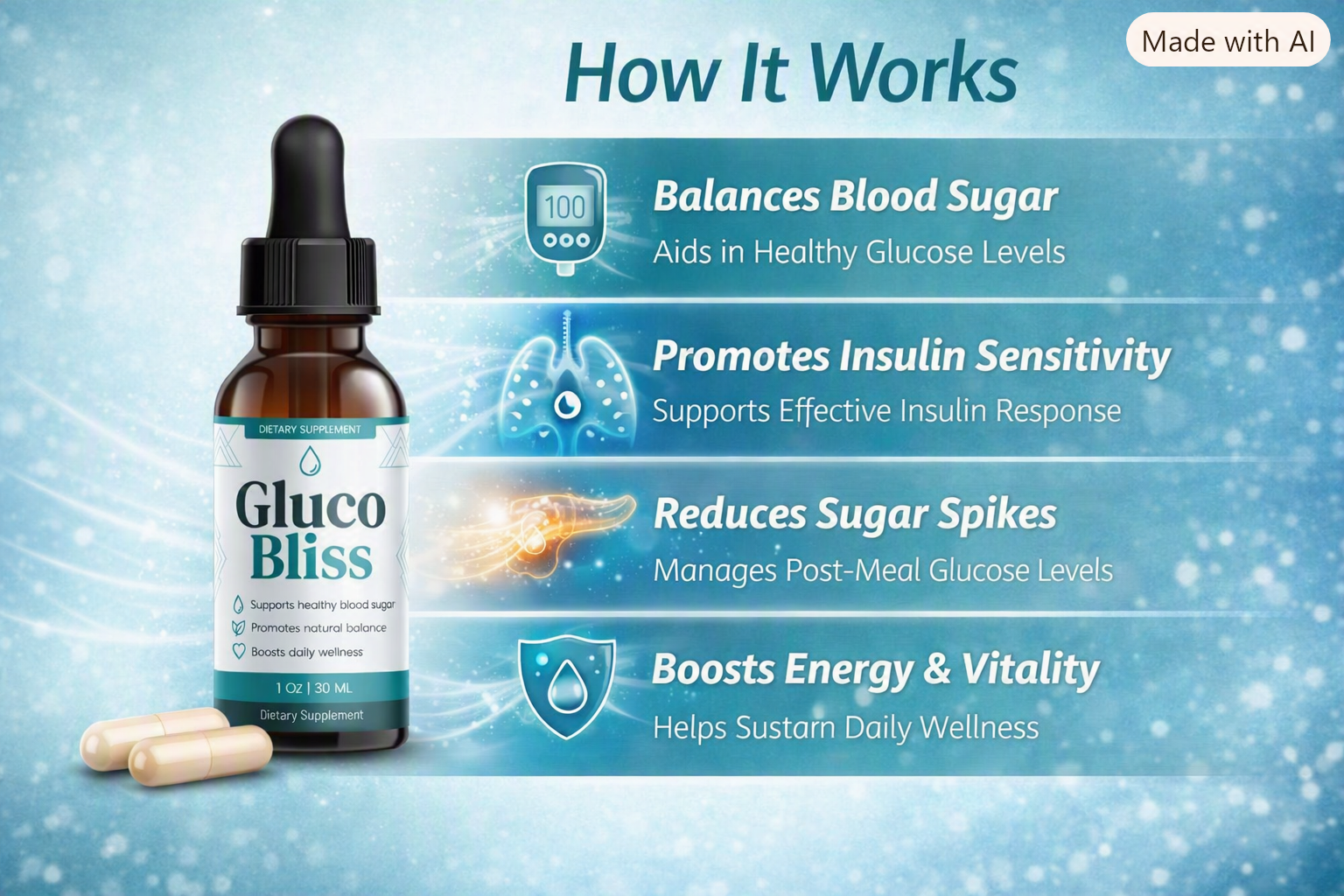
How does GlucoBliss work?
GlucoBliss works across three stages of glucose handling. Gymnema sylvestre and green tea catechins have been studied for slowing intestinal glucose absorption, reducing the size of post-meal spikes. Chromium picolinate is involved in insulin action at the receptor level, and Panax ginseng has been studied for glucose uptake into muscle. Maca and African mango address the stress and appetite signalling that indirectly raises hepatic glucose output.
On this page
Why three stages rather than one
Blood glucose at any moment is the balance of what is entering the bloodstream and what is leaving it. Entering means absorption from the gut plus glucose released by the liver. Leaving means uptake into muscle, fat and other tissue, mostly under insulin's direction.
Address only absorption and you have reduced the input while leaving the signalling problem untouched. Address only signalling and large fast-absorbed carbohydrate loads still overwhelm it. Address both and ignore cortisol, and a stressful fortnight still moves your readings with no dietary change at all.
That is the argument for a multi-ingredient formula, and it is also why single-ingredient comparisons miss the point somewhat.
Stage one: slowing what arrives
Gymnema sylvestre is the ingredient with the longest traditional record here. Its gymnemic acids are structurally similar enough to glucose to occupy receptor sites — which is why holding the extract on the tongue temporarily abolishes sweet taste, a genuinely strange effect you can test yourself.
The mechanistically interesting part is in the intestine, where the same structural similarity has been studied for competing with glucose at absorption sites. Slower absorption means a lower, flatter post-meal curve for the same meal.
Green tea catechins, principally EGCG, have been studied for inhibiting alpha-glucosidase and alpha-amylase — the enzymes that break starch into absorbable glucose. Slower breakdown, slower arrival, smaller spike.
Both effects are modest at supplement doses. Neither turns a high-carbohydrate meal into a low-carbohydrate one, and anyone framing them that way is overselling.
Stage two: helping the signal land
Chromium is the ingredient with the clearest nutritional rationale. It is an essential trace mineral, and its biological relevance is specifically to insulin action — historically described through the glucose tolerance factor, more recently studied through effects on insulin receptor signalling.
The important nuance, which the NIH Office of Dietary Supplements states plainly: benefit from chromium supplementation appears concentrated in people with low chromium status. In people already replete, adding more does not reliably improve glycaemic markers. This is the same deficiency-correction pattern that runs through most nutritional supplementation, and it is worth understanding before you form expectations.
The picolinate form is chelated to picolinic acid, which improves absorption relative to inorganic chromium salts.
Panax ginseng contributes through a different route. Ginsenosides have been studied for effects on glucose uptake into muscle tissue, with some evidence pointing at AMPK activation — a pathway that increases glucose uptake partly independently of insulin. That independence is mechanistically interesting, because it means a route that does not require the insulin signal to be working perfectly.
Stage three: the arm most supplements ignore
This is where the formula does something a little unusual, and it is worth explaining because it looks like filler until you understand it.
Cortisol is a glucose-raising hormone. Its job in an acute stress response is to make fuel available — which it does by telling the liver to increase gluconeogenesis and by reducing peripheral insulin sensitivity. That is useful for ten minutes and harmful for ten years.
Chronically elevated cortisol therefore raises blood glucose without any change in what you eat. Anyone who has watched their readings climb through a stressful period while their diet stayed constant has observed this directly.
Maca root is studied as an adaptogen — a substance proposed to modulate the stress response rather than sedate or stimulate. The adaptogen literature is genuinely mixed and we would not overstate it. The rationale for inclusion is coherent even where the evidence is preliminary.
African mango seed extract has been studied for effects on leptin sensitivity and adiponectin. Adiponectin is worth knowing about: it is an adipose-derived hormone that improves insulin sensitivity, and its levels fall as visceral fat rises. The trial literature here is small and has drawn methodological criticism, which we state on the ingredients page rather than burying.
A realistic timeline
| Window | What is happening | What people report |
|---|---|---|
| Week 1–2 | Chromium stores begin repleting if low. Gymnema and catechin effects on absorption operate meal by meal. | Often nothing. Some report reduced sweet cravings early — gymnema's most immediate effect. |
| Week 3–4 | Adaptogenic and catechin effects accumulate. Post-meal curve changes may start showing on a monitor. | Steadier afternoon energy is the commonest first report. |
| Week 4–8 | The window in which chromium's insulin-signalling contribution would realistically show, if status was low. | Where most people who notice anything say they noticed it. |
| Month 3+ | Steady state across all three arms. | Effects hold at a new baseline rather than continuing to improve. |
What this mechanism cannot do
It cannot restore beta-cell function that has been lost. Type 2 diabetes involves progressive beta-cell decline alongside insulin resistance, and no supplement reverses that. Claims about regenerating pancreatic cells go well beyond anything these ingredients support in humans.
It cannot substitute for medication. Metformin, GLP-1 agonists and insulin work through mechanisms these ingredients do not replicate, at effect sizes they do not approach.
And it cannot outrun the fundamentals. Post-meal walking, sleep duration, meal composition and weight all have larger and better-evidenced effects on glycaemic control than any supplement in this category, this one included.
Frequently asked questions
Which ingredient does the most work?
Mechanistically, chromium has the clearest nutritional link to insulin action, and gymnema the longest traditional use record for glucose absorption. Effect sizes for all of them at supplement doses are modest.
Does it work if my chromium status is already normal?
Possibly less. Chromium's evidence is strongest in people with low status, and this deficiency-correction pattern is common across nutritional supplementation.
Will I see it on a continuous glucose monitor?
Some users report flatter post-meal curves. If you use a CGM, that is a genuinely useful way to assess your own response — establish a baseline before you start.
How fast does gymnema work on cravings?
The sweet-taste effect is immediate on contact. The intestinal absorption effect operates meal by meal. Reduced sweet craving is one of the earlier things people report.
Sources & further reading
- NIH Office of Dietary Supplements — Chromium: fact sheet for health professionals.
- National Center for Complementary and Integrative Health — Green tea, ginseng and gymnema monographs.
- NIDDK — Insulin resistance and prediabetes: causes and mechanisms.
- Cochrane Library — Reviews of herbal and nutritional interventions for glycaemic control.